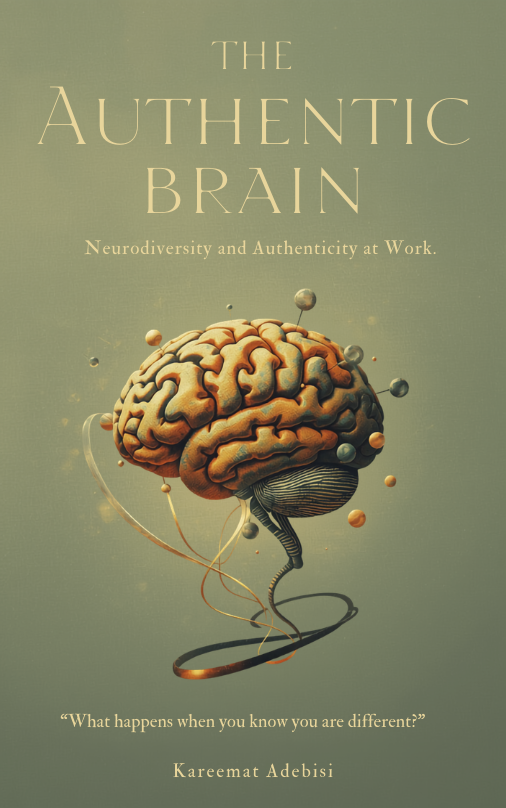
The Authentic Brain
A Mug Philosophy Guide to Neurodiversity, Authenticity, and Thriving at Work
You cannot pour from an empty cup. But first, you must know the cup is yours.— The Authentic Brain
📖 Synopsis
The Authentic Brain is the fourth book in the Mug Philosophy series. This book wraps up the journey, moving from focusing on outside culture to finding real authenticity within yourself.
The first three books explored:
- ☕️ Book 1: Personal accountability and the Mug Washer ethic
- ☕️ Book 2: Inclusion, DEI, and the missing 'E' and 'I'
- ☕️ Book 3: Recognition, opportunity, and the Pioneer-Linchpin gap
Book 4 turns inward.
It asks a question that people rarely say out loud: What happens when you know you are different?
For Mug Washers who see and experience the world in their own way, work is more than just a challenge. Every day is a balancing act between being true to yourself and just getting through.
This book is for:
- 🧠 The neurodivergent professional who masks to fit in
- ☕️ The Mug Washer who has been told they are "too much" or "not enough"
- 🔗 The quiet contributor whose brilliance is invisible
- 👩🏾💼 The leader who wants to build a culture where everyone can thrive
Using personal stories and the Mug Philosophy approach, this book shows that being authentic is not just a bonus—it's essential. It explores neurodiversity, masking, burnout, and the bravery needed to build a life that fits who you truly are.
Special credit to the work of Amandine Catala, whose definition of neuronormativity grounds and inspires this book's mission.
🔍 How to Use This Book
You can use this book as a step-by-step guide or just pick it up when you need advice. Each chapter builds on the one before, but you can also read them separately. As your needs change, feel free to return to any chapter or exercise.
📋 Template Placement Summary
Quickly find the templates and exercises you need:
| Template / Exercise | Chapter | Purpose |
|---|---|---|
| The Concentration Ladder | Chapter 1 | Build focus stamina gradually |
| Modified Pomodoro Technique | Chapter 1 | Customise work/break intervals |
| Sensory Circuit Cards | Chapter 3 | Regulate energy for focus/calm |
| ADHD Focus Plan Worksheet | Chapter 4 | Structure tasks for success |
| Pick 'n' Mix Study Skills | Chapter 13 | Personalise learning strategies |
| NESTL Framework | Chapter 15 | Inclusive learning environments |
| Neurodivergent Accommodation Form | Chapter 22 | Formalise workplace support |
| Workplace Neurodiversity Support Survey | Chapter 22 | Gather feedback on inclusion |
📘 Chapter 1: The Spectrum of Focus
"We're all on a spectrum of focus, motivation, and energy."
The Mug Washer's Hidden Drivers
I've always seen "washing the mug" as a proactive choice, a sign of discipline and respect. But for some, it isn't just a choice; it's a necessary coping mechanism.
| Visible Action | Hidden Driver |
|---|---|
| Washing a mug | Managing overstimulation – finding a moment of quiet, repetitive focus in a chaotic open-plan office |
| Washing a mug | Creating a "starter task" – using a small, completable win to build momentum for a daunting project |
| Washing a mug | Simply needing a 60-second break to reset a restless mind |
Their "discipline" and another's might look the same, but the internal drivers are vastly different.
Meanwhile, the person who leaves the mug might be deeply focused on a complex problem, their discipline channelled elsewhere.
🧠 The Spectrum of Focus
| Neurotypical Assumption | Neurodivergent Reality |
|---|---|
| Everyone can focus for 60+ minutes | Focus comes in bursts |
| Distractions are a personal failing | Distractions are a sensory reality |
| Everyone works best 9-5 | Peak productivity varies widely |
| One workspace fits all | Environment significantly impacts performance |
| Breaks are laziness | Breaks are regulation |
Key Lesson: "A truly inclusive culture doesn't just hire 'Mug Washers'; it understands why they wash and values every reason for it."
📝 Practical Exercise: Identify Your Own Spectrum of Focus
| Question | Your Answer |
| What conditions help you work best? | [Your reflection] |
| What small routine tasks do you use as coping mechanisms? | [Your reflection] |
| Where have you felt pressure to conform to neuronormative expectations that don't fit your brain? | [Your reflection] |
🛠️ Focus Tools
Different brains need different strategies. Here are two tools to help you build focus stamina in a way that works for you. Start where you are, and build from there.
📈 The Concentration Ladder
Builds sustained focus stamina through gradual, measurable increases.
- Level 1: Starter3–5 min✨ Sticker / Praise
- Level 2: Beginner6–8 min✨ Sticker / Short Break
- Level 3: Building9–11 min🎁 Small meaningful reward
- Level 4: Consolidating12–14 min🎮 Choice activity
- Level 5: Sustained15–20 min☕️ Extended break / Treat
How to use: Start at Level 1, use a timer, track progress, increase gradually, celebrate each level.
⏱️ Modified Pomodoro
Breaks tasks into short, manageable sprints with built-in breaks.
| Type | Work | Break | Cycles | Long Break |
|---|---|---|---|---|
| Classic | 25 min | 5 min | 4 | 15–30 min |
| Custom 1 | 20 min | 5 min | 3 | 20 min |
| Custom 2 | 15 min | 5 min | 4 | 15 min |
| Custom 3 | 10 min | 3 min | 6 | 15 min |
| Your Plan | ___ min | ___ min | ___ | ___ min |
How to use: Choose your intervals, set a timer, focus on one task, take breaks, adjust as needed.
📑 Table of Contents
Part One: Understanding the Authentic Self
- 1. The Spectrum of Focus
- 2. The Authenticity Question
- 3. The Mirror Test
- 4. The Gift of Brutal Honesty
- 5. Finding Your Voice
Part Two: The Workplace Reality
- 6. The Invisible Battles
- 7. Who Was the Rule Made For?
- 8. You Are Who You See
- 9. The Punishment for Competence
- 10. The Desert and the Arctic
Part Three: Building an Authentic Life
- 11. The Comma, Not the Full Stop
- 12. The Yes, and Move
- 13. Know Enough to Build
- 14. The Akudaya Mindset
- 15. Full Presence, Full Joy
- 16. Hide 'N Seek
Part Four: Creating Authentic Cultures
- 17. The Tortoise and the Hare
- 18. Reverse Mentorship
- 19. Smooth Soft Offence
- 20. Ban the Word, Not the Tool
- 21. The Art of Advocacy
- 22. The Future We Deserve
APPENDICES
- A. The Authentic Self Assessment
- B. Resources for Neurodivergent Professionals
- C. Discussion Guide for Teams and Book Clubs
- D. Connect With the Author
- E. Full Template Collection
Special Note
- With special credit to the work of Amandine Catala, whose definition of neuronormativity grounds and inspires this book's mission.

📙 How to Use This Book
This book is designed to be both a sequential guide and a practical reference. Each chapter builds on the previous one while also standing alone as a complete lesson.
For Sequential Reading: Follow the chapters in order. The framework progresses from personal accountability to team dynamics to organisational culture, mirroring the journey from individual to collective transformation.
For Targeted Reference: Use the Table of Contents to jump directly to the chapter addressing your current challenge.
For Group Study: Each chapter includes practical exercises and reflection questions suitable for team discussions or book clubs.
☕ Key Lesson from Chapter 1
Practical Exercise: Identify your own "spectrum of focus." What conditions help you work best? What small routines do you use as coping mechanisms? Where have you felt pressure to conform to neuronormative expectations that don't fit your brain?
📙 Discover the Freedom of Being Your Authentic Self
Pre-order your copy and learn how to build a life – and a workplace – where all brains can thrive.
🛒 Pre-order Now